OPEN Foundation

Search
Close this search box.

Articles

Hofmann’s Wish Came True

After 40 years without research, the recent appearance of a pilot study with Lysergic Acid Diethylamide (LSD) in humans, might be interpreted as a positive reinforcement for future attempts to study the role of psychedelics as therapeutic agents. The study of Gasser et al. (2014) was aimed at assaying the possible benefits from the use of LSD as an additive to psychotherapy in the treatment of anxiety associated with life-threatening diseases.

The participants in the double blind, randomized, active placebo-controlled study were recruited from a population of patients diagnosed with a life-threatening disease. The participants were randomized across two-groups and received two therapeutic sessions with LSD (mild-dose placebo-control group; moderate-dose experimental group) in addition to psychotherapy. The patients that were initially assigned to the placebo-control group, were offered the opportunity to participate in a second series of moderate-dose LSD-assisted therapies (open-label crossover group). The most important result from the study was that with each cumulative LSD session, anxiety seemed to reduce in the group that received a moderate dose, but not in the group that received a mild dose. In the latter group, this pattern of reduced anxiety was repeated with the second series of sessions in which the moderate dose was offered to the patients. The benefits of the LSD-assisted sessions seemed to sustain over time. Though methodological adjustments are preferred to improve matters of experimental reliability and validity (as the authors note a larger sample size, a less discriminative placebo, better treatment of secondary disease symptoms to avoid missing data), the reactions of the patients themselves suggest successful clinical guidance during the process of coping with death. Majority reported that they would have preferred more than two LSD sessions and a longer treatment period.

Not only did the study yield promising results about the controversial use of a Schedule 1 listed drug (21 U.S.C. § 812) in a therapeutic setting, the publication also received extensive international media attention (Carey, 2014; Healey, 2014; Connor, 2014) suggesting a regained public interest favoring psychedelic research. While directly after discovery the psychoactive effects of LSD were considered to be of considerable value for experimental research and psychiatric practice (Passie, Halpern, Stichtenoth, Emrich, & Hintzen, 2008), it’s reputation of the past 40 years was mainly that of a dangerous drug (SAMHSHA, 2008). In addition to a recent clinical study done with psilocybin (Grob et al., 2011) , the current study contributes to a refreshed wave that acknowledges the usefulness of psychedelics as an investigational tool for psychiatric research. With the resumption of research into LSD’s therapeutic potential, the researchers hope to have “fulfilled the longtime wish” of the founding father of LSD, Albert Hofmann, as to whom the article is dedicated.


References
Carey, B. (2014, March 4). LSD, Reconsidered for Therapy. The New York Times. Retrieved from http://www.nytimes.com
Connor, S. (2014, March 6). Can LSD ease our fear of death? First scientific study in 40 years shows positive results. The independent. Retrieved from http://www.independent.co.uk
Gasser, P., Holstein, D., Michel, Y., Doblin, R., Yazar-Klosinski, B., Passie, T., Brenneisen, R. (in press). Safety and Efficacy of Lysergic Acid Diethylamide-Assisted Psychotherapy for Anxiety Associated With Life-threatening Diseases. The Journal of Nervous and Mental Disease
Grob, C. S., Danforth, A. L., Chopra, G. S., Hagerty, M., McKay, C. R., Halberstadt, A. L., & Greer, G. R. (2011). Pilot study of psilocybin treatment for anxiety in patients with advanced-stage cancer. Archives of General Psychiatry, 68, 71–78. doi:10.1001/archgenpsychiatry.2010.116
Healy, M. (2014, March 5). First trial of LSD as medicine in 40 years shows promise. The Los Angeles Times. Retrieved from http://www.latimes.com
Passie, T., Halpern, J. H., Stichtenoth, D. O., Emrich, H. M., & Hintzen, A. (2008). The pharmacology of lysergic acid diethylamide: a review. CNS Neuroscience & Therapeutics, 14, 295–314. doi:10.1111/j.1755-5949.2008.00059.x
SAMHSA. Available at http://www.oas.samhsa.gov/ecstasy.htm, 2006. Accessed on 08 March 2014.
U.S. Food and Drug Administration. (2009, June 6). Controlled Substance Act. Retrieved from http://www.fda.gov/regulatoryinformation/legislation/ucm148726.htm
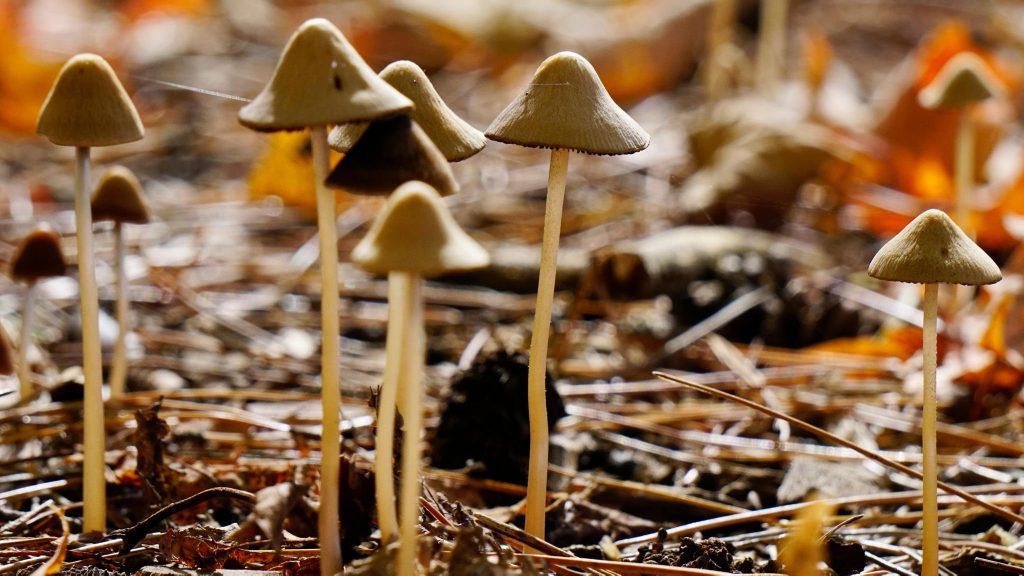
New study may explain magic mushrooms' effects

New research by a group of mainly Britisch scientists, based on fMRI brain scans, has shown that the use of psilocybin (the active constituent of magic mushrooms) decreases the activity of certain parts of the brain in test subjects. Brain activity decreased especially in those parts that are involved in the managing and filtering of information.

This may explain why users often report that under the influence of magic mushrooms they experience impressions and feelings that were previously unnoticed. Logically, when the brain’s ability to filter and handle information is decreased, more information may reach our consciousness. This may also explain why users often report new insights after the use of magic mushrooms, sometimes having therapeutic effects.

Another indication for the therapeutic effects of magic mushrooms is that brain activity also decreased in the medial prefrontal cortex, a brain part that is often hyperactive in patients suffering from depression.

Remarkably, these new results confirm the ideas of Aldous Huxley (1894-1963). Huxley saw the brain as a ‘reducing valve’, filtering and making information more manageable for our consciousness. He posed that psychedelic drugs might decrease these reducing properties of the brain.

Click here for the abstract and a link to the full article.

New online survey on ayahuasca and mourning

aya_caapi

The International Center for Ethnobotanical Education, Research And Service (ICEERS) are setting up an ambitious research project to study the effects of ayahuasca, called “Exploring New Tools to Face Grief: The Case of Ayahuasca”. The researchers want to investigate how the intake of ayahuasca influences the mourning process, due to the loss of a loved one.

Since there is no scientific data on this topic, and no studies of this kind have been carried out, ICEERS are looking to contact a large number of people that have a relation to this topic. They are looking for people willing to share their personal experiences in detail. The goal of this study is to expand the knowledge on the process of mourning and how the intake of ayahuasca affects this process.

The researchers at ICEERS are looking for anyone who has gone through this situation. If you know of somebody, or have been through a similar process yourself, they kindly request you to alert them to this initiative. The online survey consists of 78 questions and is both anonymous and private.

Click this link to continue to the survey.

Help pay for MDMA PTSD research

Recently, MAPS officially launched an Indiegogo campaign to help complete their crucial study of MDMA-assisted psychotherapy for people suffering from post-traumatic stress disorder (PTSD). OPEN supports MAPS in their efforts to raise both funds and awareness. Money is needed to progress vital research on these substances, while increasing awareness on the human and economic costs of PTSD can show that viable alternatives exist that can transform the lives of PTSD-sufferers.

The first published studies have shown that MDMA-assisted psychotherapy can be an effective treatment for people who did not respond to conventional therapies for post-traumatic stress disorder. MAPS’ studies are supported by the US government; their ongoing study in military veterans, firefighters, and police officers is halfway complete, and early results are promising. For some recent articles on MDMA-assisted PTSD-treatment, see here, here and here.

Donations will help pay the costs of conducting our ongoing clinical trial, a critical part of our international research program to develop MDMA-assisted psychotherapy into a prescription treatment for PTSD. Visit the Indiegogo page here,

A video-interview with one of the first subjects can be watched here:

Survey: New Drugs for Mental Health

After the recent published study on psychedelic substances and mental health, researchers are looking to explore this relation more deeply. The main aim of the survey is to gain novel insight towards un-noted benefits (and harms) of recreationally used drugs on mental health.

This survey was created by Imperial college, Prof D. Nutt, Dr R. Carhart-Harris and their team. According to the researchers, little is yet known about the effects on mental health of people who experiment with psychedelic substances. They are asking questions to gather information about potential usefulness for mental health of these new drugs and also to discover whether they have any unrecognised negative effects. Please click this link to participate in this recently launched online survey regarding psychoactive drugs and mental health.

Participants can fill in a different survey for each drug they want to say something about. Please only complete a survey if you have personal experience with a particular drug.

Responses will be treated as clinical information and are protected by medical confidentiality law. Your personal details will not be requested or stored.

Crowdfunding: Ayahuasca Treatment Outcome Project

An international scientific team – consisting of clinical psychiatrists and neuroscientists, medical doctors and anthropologists, epidemiologists and curanderos – is trying to set up an ambitious research project to study the effects of ayahuasca and how it affects addiction and other mental health issues. They have only 12 days left to reach their first funding goal of C$25.000, so please consider making a donation.

Since it can be a big challenge indeed to receive funding through traditional channels, OPEN supports funding serious research via other means. Donating means you are funding an interdisciplinary research design meeting contemporary high quality scientific standards, which involves thorough follow-up and a longitudinal assessment of treatment efficacy.

The team is being led by Dr. Brian Rush, Professor, Dept. of Psychiatry, University of Toronto, Canada and Scientist Emeritus at the Centre for Addiction and Mental Health, Toronto, Canada.

For more information and a video about this project have a look at their Indiegogo page.

Survey: Quit smoking after a psychedelic experience?

Researchers from the Johns Hopkins University School of Medicine are currently recruiting individuals who have quit smoking cigarettes or reduced their smoking (even temporarily) after an experience with a psychedelic, for participation in an online survey. Their team has previously conducted innovative research on the effects of compounds including psilocybin, dextromethorphan, and salvinorin A.

The goal of this survey is to learn more about whether psychedelic drugs are associated with reduction or cessation of cigarette smoking. The researchers want to characterize people’s experiences in non-­laboratory settings in which taking a psychedelic may have led to reducing or quitting smoking. For the purposes of this survey, the survey will be asking specifically about individuals who have quit smoking cigarettes or reduced their smoking (even temporarily) after experiences with psilocybin (magic) mushrooms, LSD, morning glory seeds, mescaline, peyote cactus, San Pedro cactus, DMT, or ayahuasca. This research study has been approved by the Institutional Review Board of Johns Hopkins Medicine.

The survey is completely anonymous (IP addresses will not be recorded) and will require 40-45 minutes to complete. If you are interested in participating, please click this link. Participation is voluntary and will not be financially compensated.

Participants must be 18+ years of age, speak/write English fluently, and have experienced a reduction or cessation of cigarette smoking after an experience with one of the psychedelic substances listed above. For more information, please contact the researchers via the site’s private messaging system.

Principal Investigator of this study, Matthew W. Johnson was a speaker at our Interdisciplinary Conference on Psychedelic Research in 2012. A video on the topic of this study can be watched below.

Psychedelics linked to lower mental health risks

The use of LSD, magic mushrooms, or peyote does not increase a person’s risk of developing mental health problems, according to an analysis of information from more than 130,000 randomly chosen people, including 22,000 people who had used psychedelics at least once.

Researcher Teri Krebs and clinical psychologist Pål-Ørjan Johansen, from the Norwegian University of Science and Technology’s (NTNU), cleverly used data from a US national health survey to study the association between psychedelic drug use and mental health problems.

The researchers relied on data from the 2001-2004 National Survey on Drug Use and Health, in which participants were asked about mental health treatment and symptoms of a variety of mental health conditions over the past year. The specific symptoms examined were general psychological distress, anxiety disorders, mood disorders, and psychosis.

The study showed that lifetime use of psilocybin or mescaline and past year use of LSD were associated with lower rates of serious psychological distress. Lifetime use of LSD was also significantly associated with a lower rate of outpatient mental health treatment and psychiatric medicine prescription, although the nature of these relations were not demonstrated in the Norwegians’ study.

Interestingly, the results of this study confirm the outcomes of recent clinical trials that likewise do not demonstrate lasting harmful effects from the use of psychedelics in a clinical setting. It further shows that even when used non-clinically, psychedelic substances might be able to play a role in alleviating mental health issues.

The results are published in the journal PLOS One and are freely available online.

In Memory of Andrew Sewell

The sad news has reached us that Andrew Sewell passed away on Sunday July 21st while he was recovering from surgery. R. Andrew Sewell, MD, was assistant professor of Psychiatry at Yale University where he conducted fascinating research on psyche

delics. We had the pleasure of meeting Andrew at our 2010 Mind Altering Science Conference, where he presented his research as one of our invited speakers.

We will remember Andrew Sewell as a cheerful, optimistic and talented researcher with a gift for inspiring others through his lectures. We feel that his passing away is a great loss for the psychedelic research community. Our deepest sympathies go out to Andrew’s friends and family.

Among other things, Andrew was responsible for writing the well read and sobering manual on how to become a psychedelic researcher, entitled ‘So you want to become a psychedelic researcher?’, a must read for aspiring scientists wanting to study psychedelic substances.

Thank you Andrew, for your contributions to psychedelic research and for your inspiring lectures, filled to the brim with information, delivered at high speed. You’ll be missed.

Lecture: Psilocybin in the treatment of end-of-life anxiety

flashback-psychedelic-research-returns

Dr. Grob will come all the way from Los Angeles to give a lecture on his research into psilocybin, the active ingredient in ‘magic mushrooms’. The main focus of this lecture will be the investigation into the safety and efficacy of psilocybin as a therapeutic aid in the treatment of severe anxiety in adult patients with advanced-stage cancer. Research into substances such as MDMA and ayahuasca, also investigated at the Harbor-UCLA Medical Center, will be addressed as well. There will be ample time for questions and discussion. Students, health care professionals and therapists are encouraged to attend.

Dr. Charles Grob is professor in Psychiatry & Biobehavioral Sciences at UCLA, Los Angeles (USA). He has published extensively on topics such as substance misuse and the history of hallucinogens in psychiatry. He performed the first FDA approved study of the physiological and psychological effects of MDMA; a multi-national study of ayahuasca in Brazil and has performed a pilot investigation of the safety and efficacy of psilocybin in the treatment of anxiety in adult patients with advanced-stage cancer.
The lecture will take place on Friday 14 June, from 16:00 – 18:00.
LOCATION: CREA (Muziekzaal), Nieuwe Achtergracht 170 Amsterdam.
FEE: €5,- regular / students & alumni get in for free