
Reassessing the cultural and psychopharmacological significance of Banisteriopsis caapi: preparation, classification and use among the Piaroa of Southern Venezuela
Abstract
Recent attention to the monoamine oxidase inhibiting properties of Banisteriopsis caapi‘s harmala alkaloids has precluded a balanced assessment of B. caapi‘s overall significance to indigenous South American societies. Relatively little attention has been paid to the cultural contexts, local meanings and patterns of use of B. caapi among snuff-using societies, such as the Piaroa, who do not prepare decoctions containing N,N-dimethyltryptamine (DMT) admixtures. This article reviews the psychopharmacological literature on B. caapi in light of recent ethnographic work conducted among the Piaroa of southern Venezuela. Piaroa shamans use only B. caapi’s cambium, identify at least five distinct varieties of B. caapi, and emphasise the plant’s importance for heightening empathy. Some Piaroa people also attribute a range of extra-shamanic uses to B. caapi, including as a stimulant and hunting aid. In light of the psychopharmacological complexity of harmala alkaloids, and ethnographic evidence for a wide range of B. caapi uses, future research should reconsider B. caapi‘s cultural heritage and psychopharmacological potential as a stimulant and antidepressant-like substance.
Rodd, R. (2008). Reassessing the cultural and psychopharmacological significance of Banisteriopsis caapi: preparation, classification and use among the Piaroa of Southern Venezuela. Journal of psychoactive drugs, 40(3), 301-307. 10.1080/02791072.2008.10400645
Link to full text
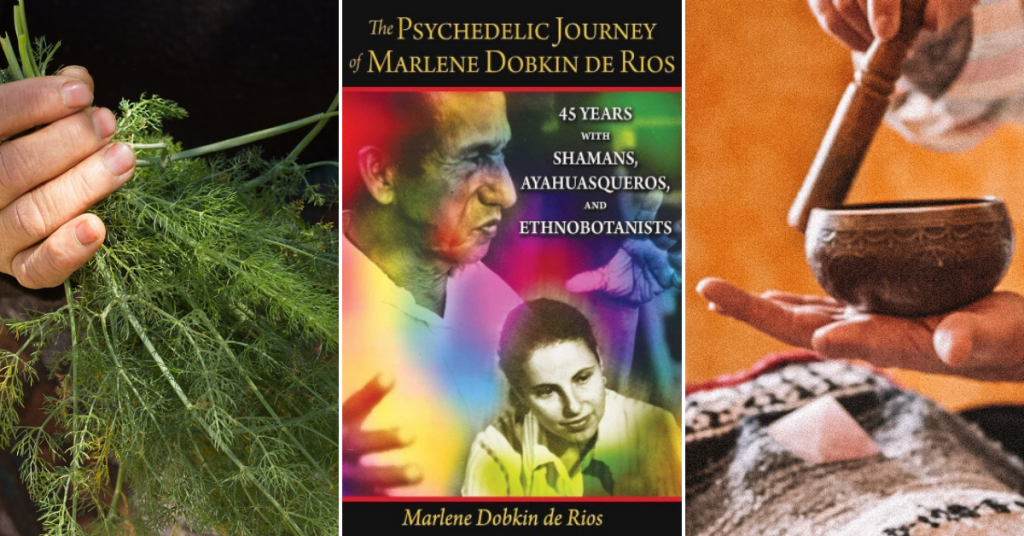
 A look inside almost half a century of pioneering research in the Amazon and Peru by a noted anthropologist studying hallucinogens, including ayahuasca – Reveals how ayahuasca successfully treats psychological and emotional disorders – Examines adolescent drug use from a cross-cultural perspective – Discusses the deleterious effects of drug tourism in the Amazon Ayahuasca is an alkaloid-rich psychoactive concoction indigenous to South America that has been employed by shamans for millennia as a spirit drug for divinatory and healing purposes. Although the late Harvard ethnobotanist Richard Evans Schultes was credited in the early 1950s as being the first to document the use of ayahuasca, other researchers, such as the distinguished anthropologist Marlene Dobkin de Rios, were responsible for furthering his findings and uncovering the curative capabilities of this amazing compound. “The Psychedelic Journey of Marlene Dobkin de Rios” presents the accumulated experience of de Rios’s 45 years of pioneering field studies in the area of hallucinogens in Peru and the Amazon. Her investigation into ayahuasca–which she undertook in collaboration with more than a dozen traditional Mestizo folk curanderos, shamans, and fellow ethnobotanists–focuses on the use of this revolutionary plant in the treatment of recalcitrant psychological and emotional disorders. She also shares some of her theories that prove that the ancient Maya used psychedelic plants as part of their religious rituals, thereby demonstrating the impact of plant psychedelics on human prehistory. In addition, Dobkin de Rios examines altered states of consciousness derived from the use of biofeedback and hypnosis and discusses her current work on the deleterious effects of drug tourism in the Amazon.