
OPEN Foundation

Search
Close this search box.

Papers

Comparative efficacy of racemic ketamine and esketamine for depression: A systematic review and meta-analysis

Abstract

Background: Ketamine appears to have a therapeutic role in certain mental disorders, most notably depression. However, the comparative performance of different formulations of ketamine is less clear.

Objectives: This study aimed to assess the comparative efficacy and tolerability of racemic and esketamine for the treatment of unipolar and bipolar major depression.

Design: Systematic review and meta-analysis.

Data sources: We searched PubMed, MEDLINE, Embase, PsycINFO, the Cochrane Central Register of Controlled Clinical Trials, and the Cochrane Database of Systematic Reviews for relevant studies published since database inception and December 17, 2019.

Study eligibility criteria: We considered randomized controlled trials examining racemic or esketamine for the treatment of unipolar or bipolar major depression.

Outcomes: Primary outcomes were response and remission from depression, change in depression severity, suicidality, retention in treatment, drop-outs, and drop-outs due to adverse events.

Analysis: Evidence from randomized controlled trials was synthesized as rate ratios (RRs) for treatment response, disorder remission, adverse events, and withdrawals and as standardized mean differences (SMDs) for change in symptoms, via random-effects meta-analyses.

Findings: 24 trials representing 1877 participants were pooled. Racemic ketamine relative to esketamine demonstrated greater overall response (RR = 3.01 vs. RR = 1.38) and remission rates (RR = 3.70 vs. RR = 1.47), as well as lower dropouts (RR = 0.76 vs. RR = 1.37).

Conclusions: Intravenous ketamine appears to be more efficacious than intranasal esketamine for the treatment of depression.

Bahji, A., Vazquez, G. H., & Zarate, C. A., Jr (2021). Comparative efficacy of racemic ketamine and esketamine for depression: A systematic review and meta-analysis. Journal of affective disorders, 278, 542–555. https://doi.org/10.1016/j.jad.2020.09.071
Link to full text

Compassionate use of psychedelics

Abstract

In the present paper, we discuss the ethics of compassionate psychedelic psychotherapy and argue that it can be morally permissible. When talking about psychedelics, we mean specifically two substances: psilocybin and MDMA. When administered under supportive conditions and in conjunction with psychotherapy, therapies assisted by these substances show promising results. However, given the publicly controversial nature of psychedelics, compassionate psychedelic psychotherapy calls for ethical justification. We thus review the safety and efficacy of psilocybin- and MDMA-assisted therapies and claim that it can be rational for some patients to try psychedelic therapy. We think it can be rational despite the uncertainty of outcomes associated with compassionate use as an unproven treatment regime, as the expected value of psychedelic psychotherapy can be assessed and can outweigh the expected value of routine care, palliative care, or no care at all. Furthermore, we respond to the objection that psychedelic psychotherapy is morally impermissible because it is epistemically harmful. We argue that given the current level of understanding of psychedelics, this objection is unsubstantiated for a number of reasons, but mainly because there is no experimental evidence to suggest that epistemic harm actually takes place.
Greif, A., & Šurkala, M. (2020). Compassionate use of psychedelics. Medicine, Health Care, and Philosophy.,
Link to full text

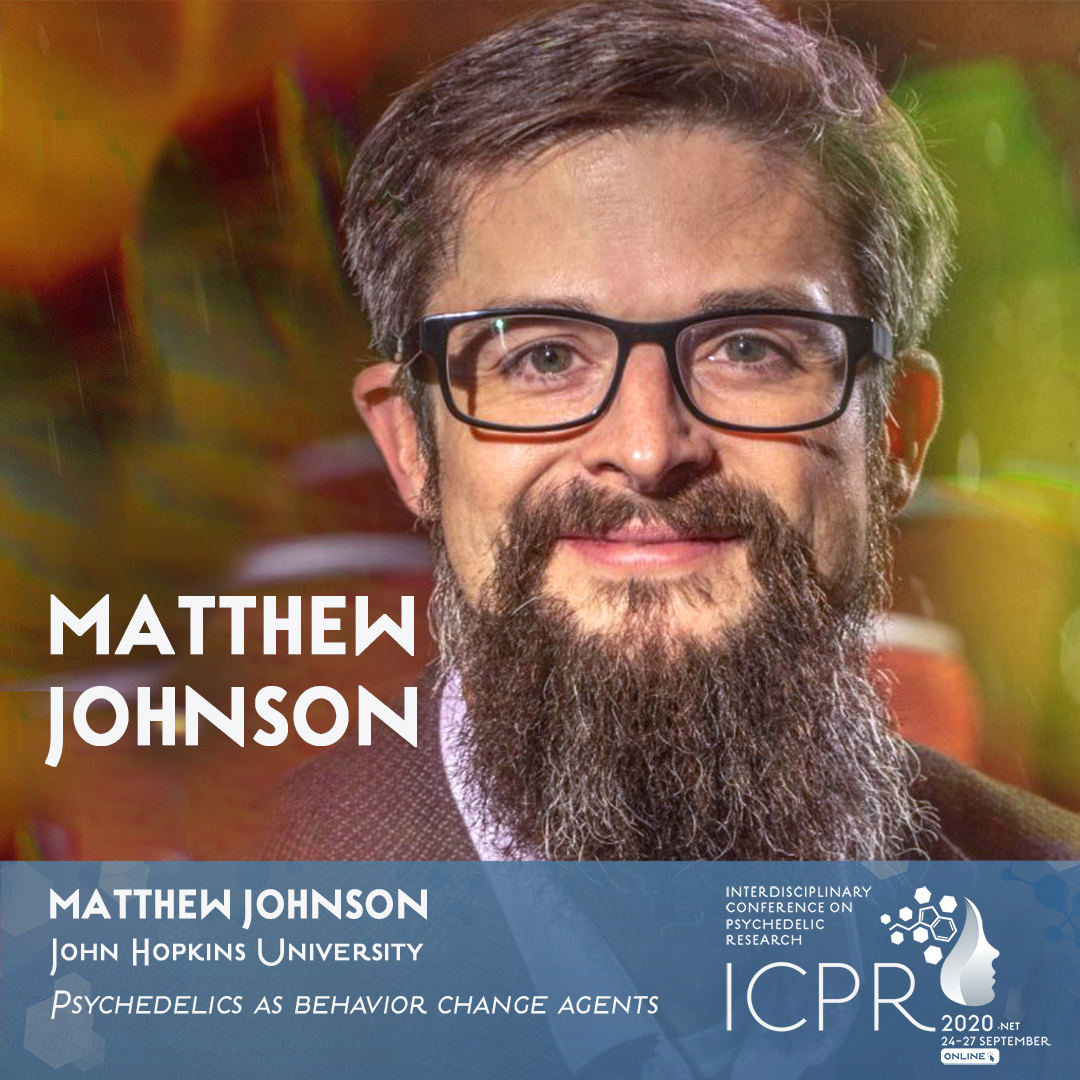
Matthew Jonhson: psychedelics are brain plasticity-inducing

MatthewJohnson
Matthew Johnson is associate director of the Center for Psychedelic and Consciousness Research at Johns Hopkins University – a center created last year. Johnson is one of the world’s leading researchers in psychedelic science. The Open Foundation asked him to reflect on some hot topics in psychedelic science today – like the mystical experience, business players entering psychedelic research and new avenues of clinical research.
In September of 2019, Johns Hopkins launched its Center for Psychedelic and Consciousness Research. Just a few months earlier, Imperial College in London had started its own Centre for Psychedelic Research. The creation of the Hopkins center seemed like a ‘response’, in a way. Is there some rivalry we need to know about?
The seeds were being sown long before we were aware of the Imperial center, so I wouldn’t say so. There’s far more room for synergy and collaboration than for rivalry in this field. Of course, you always like to be the first to publish a paper on a given subject, that’s just human. But in the big picture, it’s really great that there are two large, very credible centers in the world, and the hope is that it’s going to keep growing. There’s even a third center in South Carolina now, with Michael Mithoefer and others.
What’s the added value of dedicated centers for psychedelic research?
The center is a term used in academics to mean a certain level of funding that allows for an increased concentration and focus on a research area. Functionally, the important thing is that it’s dramatically increasing the throughput of our work on psychedelics.
Your group at Hopkins seems to place a good deal of emphasis on the mystical experience and considers it the mechanism of action for therapeutic outcomes of psychedelic therapy, whereas Imperial focuses more on imagery and neuroscience. Where does this focus on the mystical experience come from?
I think there’s a focus on the biology and the neuroscience at both sites. I’m conducting a study with 80 people on smoking cessation where subjects are undergoing fMRI with a variety of tasks before and after the experience. Fred Barrett in our group is a neuroscientist, and he’s conducting a number of studies right now. In terms of the psychology, the Imperial group has used more of a Freudian model and we have focused more on the mystical experience, but I think empirically we’re likely talking about the same thing. The term ‘ego loss’ has a high correlation to the mystical experience of unity. The focus on mystical experience dates back to William James, and I see it as continuing a thread of interest in this kind of experience that human beings, around the world and throughout time, have consistently reported. It seems that psychedelics prompt those types of experiences, so that interest is far larger than the therapeutic use of psychedelics, which in itself is very important. It taps into the idea that these can be tools for understanding the biology and the very nature of these extraordinary human experiences, and their ability – however occasioned – to prompt behavior change.
The Hopkins Center is set to research interesting new indications: anorexia, distress associated with Alzheimer’s, and aftercare for Lyme disease.
We have started the first two. We’re actively recruiting for the anorexia treatment study, and we’ve actually run participants through that study, but not enough to discern any results yet. We’re also actively recruiting for the mood within Alzheimer’s disease study. We have the funding for the other study, on post-treatment Lyme disease syndrome, as it’s come to be known, and we’re preparing the regulation to be able to conduct it. We should be starting it within a few months.
What exactly is the aim regarding Alzheimer’s?
The primary aim is clearly the mood of patients, through the lens of cancer research, where the focus is not on treating the disease, but the psychological suffering that so often comes with it, and the existential distress that is also there with dementia. But we’re also going to look at the cognitive outcomes, because there are some interesting animal studies that suggest that there are potential positive cognitive effects of these compounds. Also because having a profound psychological reorientation, where you have reductions in depression, might in itself lead to improved cognition and slow the disease process. We’re not holding our breath that we’ll see something there, but it’s worth a look.
Both the center in Baltimore and the one in London are funded by private donors: do you understand the concerns of people who are wary of the increasing interference of big business with psychedelic research?
There are many opinions out there, so I’m not sure what the concerns exactly are. The Center is funded through a non-profit model and it’s 100 % philanthropy, so I think it’s unrelated to any concerns about business involvement in this area.
Well, people like Tim Ferriss raise some questions. He’s an investor, and investors are known to seek some kind of return on their investments. Some people are quite suspicious of that.
At the surface level I can understand the concerns, if people don’t know the details. From knowing the details, I can say that if his goal was to have a financial return on investment, he’s done a very poor job at setting things up. However, he’s been very clear that the goal was to leverage the growth of an area and the advancement of science.
Humans are interested in leaving a legacy, and being known for having had an impact, so that may be relevant to anybody who makes an investment in an area with a hope for its growth. I think he wants to see this area take off, and a lot of people look to him as someone who sees what’s coming in the future. I also think this has already been an advantage in terms of people paying attention to this area.
Are you concerned that, once legal, psychedelic therapy might turn into big business? The business press is already touting psychedelic therapy as the next big cash cow.
If we’re on to something – and I think we are – then this will happen. There are niches to fill. So the real questions become: What are the actions of any particular entity? Are they operating ethically or unethically? The commercialization of psychedelics raises concerns about the potential for bad actors, but there can be bad actors in pure non-profit and in pure academia. The potential on the monetary side is obviously increased once you introduce a business model. So I think there’s a rationale for increased concern about bad actors. But the fact that business is jumping into this is not a bad thing in itself. It’s a 100 % expected outcome, and overall it’s a good thing. We just have to keep our eyes on the way people are operating.
The title of your ICPR talk will be: “Psychedelics as behavior change agents.” What can we expect?
I want this to be a big-picture presentation that draws from multiple lines of evidence. Not about the treatment of this or that disorder, or this or that effect, but really drawing across all that. The overall point is that psychedelics can occasion behavior change. They seem to be powerful ways to induce mental and behavioral plasticity. We have a whole lot more to figure out on the biology of that and how to most properly leverage psychedelics towards those aims. There’s also a lot to figure out about so-called ‘integration’, but it’s probably that people are left in a state of increased neuroplasticity, which can depend on many mechanisms. So I’d like to present the basic argument that, in the broadest sense, these are plasticity-inducing agents.

Structure of a Hallucinogen-Activated Gq-Coupled 5-HT 2A Serotonin Receptor

Abstract

Hallucinogens like lysergic acid diethylamide (LSD), psilocybin, and substituted N-benzyl phenylalkylamines are widely used recreationally with psilocybin being considered as a therapeutic for many neuropsychiatric disorders including depression, anxiety, and substance abuse. How psychedelics mediate their actions-both therapeutic and hallucinogenic-are not understood, although activation of the 5-HT2A serotonin receptor (HTR2A) is key. To gain molecular insights into psychedelic actions, we determined the active-state structure of HTR2A bound to 25-CN-NBOH-a prototypical hallucinogen-in complex with an engineered Gαq heterotrimer by cryoelectron microscopy (cryo-EM). We also obtained the X-ray crystal structures of HTR2A complexed with the arrestin-biased ligand LSD or the inverse agonist methiothepin. Comparisons of these structures reveal determinants responsible for HTR2A-Gαq protein interactions as well as the conformational rearrangements involved in active-state transitions. Given the potential therapeutic actions of hallucinogens, these findings could accelerate the discovery of more selective drugs for the treatment of a variety of neuropsychiatric disorders.

Kim, K., Che, T., Panova, O., DiBerto, J. F., Lyu, J., Krumm, B. E., Wacker, D., Robertson, M. J., Seven, A. B., Nichols, D. E., Shoichet, B. K., Skiniotis, G., & Roth, B. L. (2020). Structure of a Hallucinogen-Activated Gq-Coupled 5-HT2A Serotonin Receptor. Cell, 182(6), 1574–1588.e19. https://doi.org/10.1016/j.cell.2020.08.024

Link to full text

Efficacy of Psychoactive Drugs for the Treatment of Posttraumatic Stress Disorder: A Systematic Review of MDMA, Ketamine, LSD and Psilocybin

Abstract

The aim of this systematic review was to examine the efficacy of MDMA, ketamine, LSD, and psilocybin for the treatment of posttraumatic stress disorder (PTSD). A search of four databases for English language, peer-reviewed literature published from inception to 18th October 2019 yielded 2,959 records, 34 of which were screened on full-text. Observational studies and RCTs which tested the efficacy of MDMA, ketamine, LSD, or psilocybin for reducing PTSD symptoms in adults, and reported changes to PTSD diagnosis or symptomatology, were included. Nine trials (five ketamine and four MDMA) met inclusion criteria. Trials were rated on a quality and bias checklist and GRADE was used to rank the evidence. The evidence for ketamine as a stand-alone treatment for comorbid PTSD and depression was ranked “very low”, and the evidence for ketamine in combination with psychotherapy as a PTSD treatment was ranked “low”. The evidence for MDMA in combination with psychotherapy as a PTSD treatment was ranked “moderate”.

Varker, T., Watson, L., Gibson, K., Forbes, D., & O’Donnell, M. L. (2021). Efficacy of Psychoactive Drugs for the Treatment of Posttraumatic Stress Disorder: A Systematic Review of MDMA, Ketamine, LSD and Psilocybin. Journal of psychoactive drugs, 53(1), 85–95. https://doi.org/10.1080/02791072.2020.1817639

Link to full text

Psychedelic drugs: neurobiology and potential for treatment of psychiatric disorders

Abstract

Renewed interest in the use of psychedelics in the treatment of psychiatric disorders warrants a better understanding of the neurobiological mechanisms underlying the effects of these substances. After a hiatus of about 50 years, state-of-the art studies have recently begun to close important knowledge gaps by elucidating the mechanisms of action of psychedelics with regard to their effects on receptor subsystems, systems-level brain activity and connectivity, and cognitive and emotional processing. In addition, functional studies have shown that changes in self-experience, emotional processing and social cognition may contribute to the potential therapeutic effects of psychedelics. These discoveries provide a scientific road map for the investigation and application of psychedelic substances in psychiatry.

Vollenweider, F. X., & Preller, K. H. (2020). Psychedelic drugs: neurobiology and potential for treatment of psychiatric disorders. Nature reviews. Neuroscience, 21(11), 611–624. https://doi.org/10.1038/s41583-020-0367-2

Link to full text

Whole-Brain Models to Explore Altered States of Consciousness from the Bottom Up

Abstract

The scope of human consciousness includes states departing from what most of us experience as ordinary wakefulness. These altered states of consciousness constitute a prime opportunity to study how global changes in brain activity relate to different varieties of subjective experience. We consider the problem of explaining how global signatures of altered consciousness arise from the interplay between large-scale connectivity and local dynamical rules that can be traced to known properties of neural tissue. For this purpose, we advocate a research program aimed at bridging the gap between bottom-up generative models of whole-brain activity and the top-down signatures proposed by theories of consciousness. Throughout this paper, we define altered states of consciousness, discuss relevant signatures of consciousness observed in brain activity, and introduce whole-brain models to explore the biophysics of altered consciousness from the bottom-up. We discuss the potential of our proposal in view of the current state of the art, give specific examples of how this research agenda might play out, and emphasize how a systematic investigation of altered states of consciousness via bottom-up modeling may help us better understand the biophysical, informational, and dynamical underpinnings of consciousness.

Cofré, R., Herzog, R., Mediano, P., Piccinini, J., Rosas, F. E., Sanz Perl, Y., & Tagliazucchi, E. (2020). Whole-Brain Models to Explore Altered States of Consciousness from the Bottom Up. Brain sciences, 10(9), 626. https://doi.org/10.3390/brainsci10090626

Link to full text

Beyond ecstasy: Alternative entactogens to 3,4-methylenedioxymethamphetamine with potential applications in psychotherapy

Abstract

The last two decades have seen a revival of interest in the entactogen 3,4-methylenedioxy-N-methylamphetamine (MDMA) as an adjunct to psychotherapy, particularly for the treatment of post-traumatic stress disorder. While clinical results are highly promising, and MDMA is expected to be approved as a treatment in the near future, it is currently the only compound in its class of action that is being actively investigated as a medicine. This lack of alternatives to MDMA may prove detrimental to patients who do not respond well to the particular mechanism of action of MDMA or whose treatment calls for a modification of MDMA’s effects. For instance, patients with existing cardiovascular conditions or with a prolonged history of stimulant drug use may not fit into the current model of MDMA-assisted psychotherapy, and could benefit from alternative drugs. This review examines the existing literature on a host of entactogenic drugs, which may prove to be useful alternatives in the future, paying particularly close attention to any neurotoxic risks, neuropharmacological mechanism of action and entactogenic commonalities with MDMA. The substances examined derive from the 1,3-benzodioxole, cathinone, benzofuran, aminoindane, indole and amphetamine classes. Several compounds from these classes are identified as potential alternatives to MDMA.

Oeri H. E. (2021). Beyond ecstasy: Alternative entactogens to 3,4-methylenedioxymethamphetamine with potential applications in psychotherapy. Journal of psychopharmacology (Oxford, England), 35(5), 512–536. https://doi.org/10.1177/0269881120920420

Link to full text

Chemical Composition of Traditional and Analog Ayahuasca

Abstract

Traditional ayahuasca can be defined as a brew made from Amazonian vine Banisteriopsis caapi and Amazonian admixture plants. Ayahuasca is used by indigenous groups in Amazonia, as a sacrament in syncretic Brazilian religions, and in healing and spiritual ceremonies internationally. The study aimed to determine concentrations of the main bio- and psychoactive components of ayahuasca used in different locations and traditions. We collected 102 samples of brews from ayahuasca-using communities. Concentrations of N,N-dimethyltryptamine (DMT), tetrahydroharmine, harmine, and harmaline were determined by ultra-high performance liquid chromatography coupled to tandem mass spectrometry (UHPLC-MS/MS). Qualitative analyses for non-traditional additives (moclobemide, psilocin, yuremamine) were performed by high resolution mass spectrometry. Higher and more variable concentrations of DMT in neoshamanic ayahuasca samples compared to indigenous samples may indicate use of higher and more variable proportions of DMT-containing admixture plants. From European samples, we found two related samples of analog ayahuasca containing moclobemide, psilocin, DMT, yuremamine, and very low concentrations of B. caapi alkaloids. Some analogs of ayahuasca (Peganum harmala, Mimosa tenuiflora) were used in Europe. No analogs were found from Brazil or Santo Daime ceremonies in Europe. We recommend awareness about the constituents of the brew and ethical self-regulation among practitioners of ayahuasca ceremonies.

Kaasik, H., Souza, R., Zandonadi, F. S., Tófoli, L. F., & Sussulini, A. (2021). Chemical Composition of Traditional and Analog Ayahuasca. Journal of psychoactive drugs, 53(1), 65–75. https://doi.org/10.1080/02791072.2020.1815911

Link to full text

Positive effects of psychedelics on depression and wellbeing scores in individuals reporting an eating disorder

Abstract

Purpose: Psychedelic therapy is showing promise for a broad range of mental health conditions, indicative of a transdiagnostic action. While the efficacy of symptom-focused treatments for eating disorders (EDs) is limited, improved mental health and psychological wellbeing are thought to contribute to greater treatment outcomes. This study provides the first quantitative exploration of the psychological effects of psychedelics in those reporting an ED diagnosis.

Methods: Prospective, online data were collected from individuals planning to take a psychedelic drug. Twenty-eight participants reporting a lifetime ED diagnosis completed measures of depressive symptomology (Quick Inventory of Depressive Symptomology; QIDS-SR16) and psychological wellbeing (Warwick-Edinburgh Mental Wellbeing Scale; WEMWBS) 1-2 weeks before, and 2 weeks after a psychedelic experience. Twenty-seven of these participants also completed a measure of emotional breakthrough [Emotional Breakthrough Inventory (EBI)] in relation to the acute psychedelic experience.

Results: Bayesian t tests demonstrated overwhelming evidence for improvements in depression and wellbeing scores following the psychedelic experience. Marginal evidence was also found for a correlation between emotional breakthrough and the relevant mental health improvements.

Conclusion: These findings provide supportive evidence for positive psychological aftereffects of a psychedelic experience that are relevant to the treatment of EDs. It is hoped that this will encourage further research and will bolster initiatives to directly examine the safety and efficacy of psychedelic assisted therapy as a treatment of EDs in future clinical trials.

Level of evidence: Level III, cohort study.

Spriggs, M. J., Kettner, H., & Carhart-Harris, R. L. (2021). Positive effects of psychedelics on depression and wellbeing scores in individuals reporting an eating disorder. Eating and weight disorders : EWD, 26(4), 1265–1270. https://doi.org/10.1007/s40519-020-01000-8

Link to full text